Managing Instant Electric Torque Transfer
The drivetrain on an electric dirt bike transfers the massive, instantaneous rotational torque of the brushless motor to the rear wheel. Unlike internal combustion motorcycles that build power progressively through a multi-speed gearbox and clutch, an electric motor delivers maximum torque starting at zero RPM.
Every throttle input sends severe shock loads through the primary and secondary drive components. A well-engineered drivetrain ensures efficient power transfer, minimal friction loss, long service life, and whisper-quiet operation without chain slap, link stretching, or sudden derailment under power. Drivetrain reliability is essential whether you are charging up steep rock climbs or commuting through city streets.
Stock Drivetrain Weaknesses & Chain Stretch
Factory drivetrains are subjected to rapid wear and frequent maintenance issues under aggressive riding:
- Rapid Chain Stretch: Stock non-O-ring chains utilize basic stamped steel links that stretch rapidly under electric torque spikes, requiring adjustment almost every ride to prevent derailing.
- Excessive Drivetrain Noise: Dry primary and secondary chains produce constant metallic grinding and clatter, destroying the stealth advantage of an electric bike.
- Heavy Sprocket Wear: Soft OEM rear sprockets wear into sharp "shark-tooth" profiles within a few hundred miles of hard riding.
- Grease Sling & Maintenance: Non-sealed roller chains require constant wet lubrication, which flings dirty grease over the swingarm and attracts abrasive trail grit.
- Jackshaft Bearing Strain: Unaligned or over-tightened chains place high radial stress on primary reduction bearings, leading to premature bearing failure.
Choosing Between Race Chains and Belt Drive Systems
Your riding discipline determines the ideal drivetrain configuration:
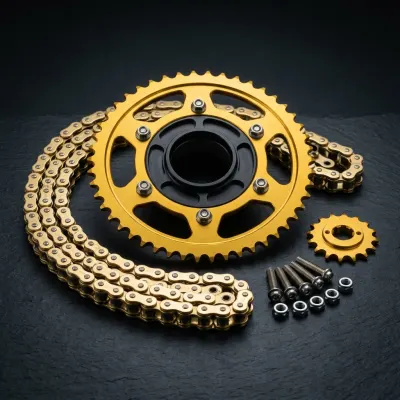
- EBMX Gold Race Chain & Sprocket Kit (Heavy-Duty Off-Road & Competition):
- Specs: 420-pitch gold-plated O-ring sealed chain, case-hardened 14T front sprocket, and CNC 7075-T6 aluminum 58T rear sprocket.
- Advantages: Internal O-ring seals retain grease and keep dirt out; 7075-T6 alloy rear sprocket cuts rotating mass by 40% while handling 15kW+ loads.
- Best For: Hard enduro, motocross, deep sand, and extreme mud riding.
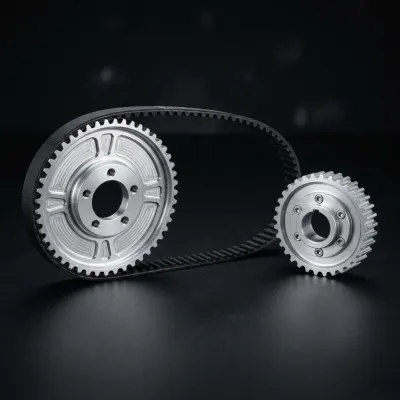
- Darwin EV Primary Belt Drive Conversion (Stealth & Zero-Maintenance):
- Specs: Gates Carbon Drive CDX polyurethane belt with carbon fiber tensile cords, CNC 6061 billet hard-anodized pulleys.
- Advantages: Eliminates 75%+ of drivetrain noise, requires zero lubrication, delivers smooth throttle response, and provides 15,000+ miles of service.
- Best For: Street commuting, urban cruising, neighborhood trails, and dry singletrack.
Companion Upgrades & Gearing Selection
Optimize your drivetrain with these setup tips:
- Sprocket Gearing Ratios: A larger 58T rear sprocket (like the EBMX kit) increases bottom-end wheel torque and climbing authority for technical trails, while smaller sprockets (48T–52T) increase top-end cruising speed for street riding.
- Chain Alignment & Tension: Maintain approximately 15mm to 20mm of vertical chain slack midway along the swingarm to allow suspension compression without binding.
- Master Link Safety: When installing a new chain, always ensure the closed end of the master link clip faces the direction of forward chain rotation.
- Chain Guide Alignment: Inspect the plastic chain guide block for proper alignment with the rear sprocket to prevent chain derailment.
- Periodic Jackshaft Inspection: Check jackshaft bearings for smooth rotation whenever changing primary drive belts or chains.
Drivetrains & Chains FAQ
What is the difference between a 420 O-ring chain and a standard non-O-ring chain?
An O-ring chain features rubber seals between link plates that trap factory lubricant inside pin bushings while locking out abrasive trail dirt and water, extending chain life by 3x to 5x.
How does a 58T rear sprocket change my bike's performance compared to stock 48T?
A 58T rear sprocket increases mechanical gear reduction, delivering roughly 20% more low-end wheel torque for faster acceleration and steeper hill climbing, with a slight reduction in top speed.
Can a belt drive system handle high-power aftermarket controllers?
Yes. Darwin EV carbon belt systems utilize high-tensile carbon tensile cords engineered to handle continuous torque spikes from tuned 60V and 72V controllers up to 10kW.
How often should an O-ring race chain be cleaned and lubricated?
Clean your O-ring chain with a soft nylon brush and dedicated O-ring safe cleaner every 3–5 rides, followed by a light coating of dedicated wax-based or synthetic chain lubricant.
How do I adjust belt tension on a primary belt drive conversion?
Adjust the motor mount eccentric or slider until the belt deflects roughly 5mm under moderate thumb pressure. Avoid over-tightening to protect motor bearings.
What causes primary chain clatter on a stock Sur-Ron?
Stock non-O-ring primary chains run dry in an unsealed cavity, amplifying metal-on-metal tooth engagement noise. Replacing it with a Darwin EV carbon belt completely silences this area.