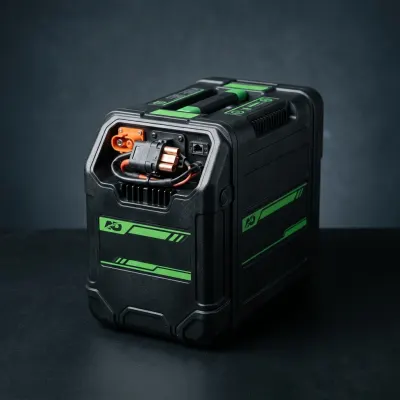
The Powerplant of the Electric Dirt Bike
In an electric motorcycle, the lithium-ion battery pack is the fuel tank and combustion engine combined into a single electrochemical energy storage unit. It dictates not only how far you can ride on a single charge, but also the maximum instantaneous horsepower, peak torque, and sustained acceleration the machine can generate. High-performance electric dirt bike riding places extraordinary demands on lithium cells: rapid high-amperage continuous discharging during steep hill climbs, violent vibration and shock loads over rock gardens, and severe thermal accumulation inside enclosed frame cavities. A robust battery architecture ensures predictable voltage delivery, cool operation, and hundreds of reliable charge cycles.
Factory Battery Limitations & Voltage Sag
Stock factory batteries (typically 60V nominal with 32Ah–38Ah capacity) are engineered for casual trail riding and strict cost efficiency. Under aggressive riding conditions, several limitations emerge:
- Severe Voltage Sag: Under sudden full-throttle loads, internal cell resistance causes system voltage to plummet by 6V to 10V. This voltage sag causes noticeable power loss, sluggish acceleration, and premature low-voltage cutoffs.
- Current Capping by Stock BMS: Factory Battery Management Systems (BMS) are typically limited to 90A–100A continuous discharge, restricting total electrical power output to approximately 5kW–6kW.
- Thermal Saturation & Throttling: High continuous discharge heats up standard-grade cells, triggering protective thermal BMS throttling during extended uphill rides or sand sessions.
- Slow Factory Recharging: Standard 2A–3A OEM chargers require 4 to 6 hours to recharge a depleted pack, limiting ride frequency during weekend trail excursions.
What to Look for in an Upgraded Battery Pack
Upgrading to a high-voltage battery pack (such as the Luna Cycle 72V Sur-Ron Battery Pack) represents the ultimate powertrain enhancement. Evaluate these vital engineering features:
- Nominal Voltage (60V vs. 72V Architecture): Moving from 60V nominal (16S) to 72V nominal (20S) increases electrical potential by 20%. Higher voltage allows brushless motors to produce higher RPM and more mechanical power with lower amperage draw, dramatically reducing Joule heating ($I^2R$ thermal loss) in the motor and controller.
- Tier-One High-Discharge Cells: Look for battery packs assembled with premium tier-one cylindrical cells (such as Samsung 50S, Molicel P42A, or LG INR) capable of continuous 30A–45A discharge per cell without dangerous cell degradation.
- Heavy-Duty Smart BMS: An integrated smart BMS with Bluetooth telemetry allows you to monitor individual cell group voltages, internal temperatures, and total cycle count while safeguarding against over-discharge, over-charge, cell imbalance, and short circuits.
- Enclosure Durability & Weather Sealing: Ensure the pack is housed in a rigid stainless steel or high-impact composite shell with rubber dampening and IP65+ water resistance to survive harsh off-road roost and pressure washing.
Companion Upgrades & Safety Requirements
Upgrading your battery architecture requires matching system components:
- Aftermarket High-Voltage Controller: A 72V battery cannot be connected to a stock 60V factory controller. You must pair the battery with a 72V-compatible controller (such as the EBMX X-9000, KO Beast V2, or Nucular 12F).
- Dedicated 72V Smart Charger: Never attempt to charge a 72V battery with a stock 60V charger. Use a dedicated 72V (84.0V peak cut-off) smart charger with CC/CV (constant current / constant voltage) charging algorithms.
- Upgraded Main DC Breaker: Install a high-amperage 63A–80A DC circuit breaker to handle elevated continuous wattages.
- Battery Tray Prep: Clean out all dirt, small stones, and grit from the bottom of the battery tray before sliding in an upgraded pack to prevent abrasive wear on the battery enclosure.
Batteries & Chargers FAQ
Why does upgrading from 60V to 72V make an electric dirt bike faster?
Brushless DC motor speed is directly proportional to applied voltage (governed by the motor's Kv rating). Elevating system voltage from 60V to 72V increases maximum motor RPM, providing higher top speed and broader power delivery without excessive heat.
How should I store my lithium battery during the off-season or winter?
Store lithium batteries in a dry, climate-controlled room (between 50°F and 70°F) at roughly 50% to 60% state of charge (approx. 74V–76V for a 72V pack). Never store a battery fully discharged or in sub-freezing temperatures.
Does a 72V battery pack fit into the stock Sur-Ron battery tray?
Yes. Premium aftermarket 72V packs are engineered to drop into the factory battery compartment, though taller high-capacity packs may utilize an extended top lid latch to secure the cover firmly.
How many charge cycles can I expect from a high-quality lithium pack?
Tier-one lithium packs typically deliver 500 to 800 full charge/discharge cycles before capacity degrades to 80% of original rating, representing years of active trail riding.
Can I charge my battery immediately after a hard ride?
Always let your battery rest for 20 to 30 minutes after an aggressive ride to allow internal cell temperatures to equalize before plugging in the charger.